Uncontrollable and Unashamed

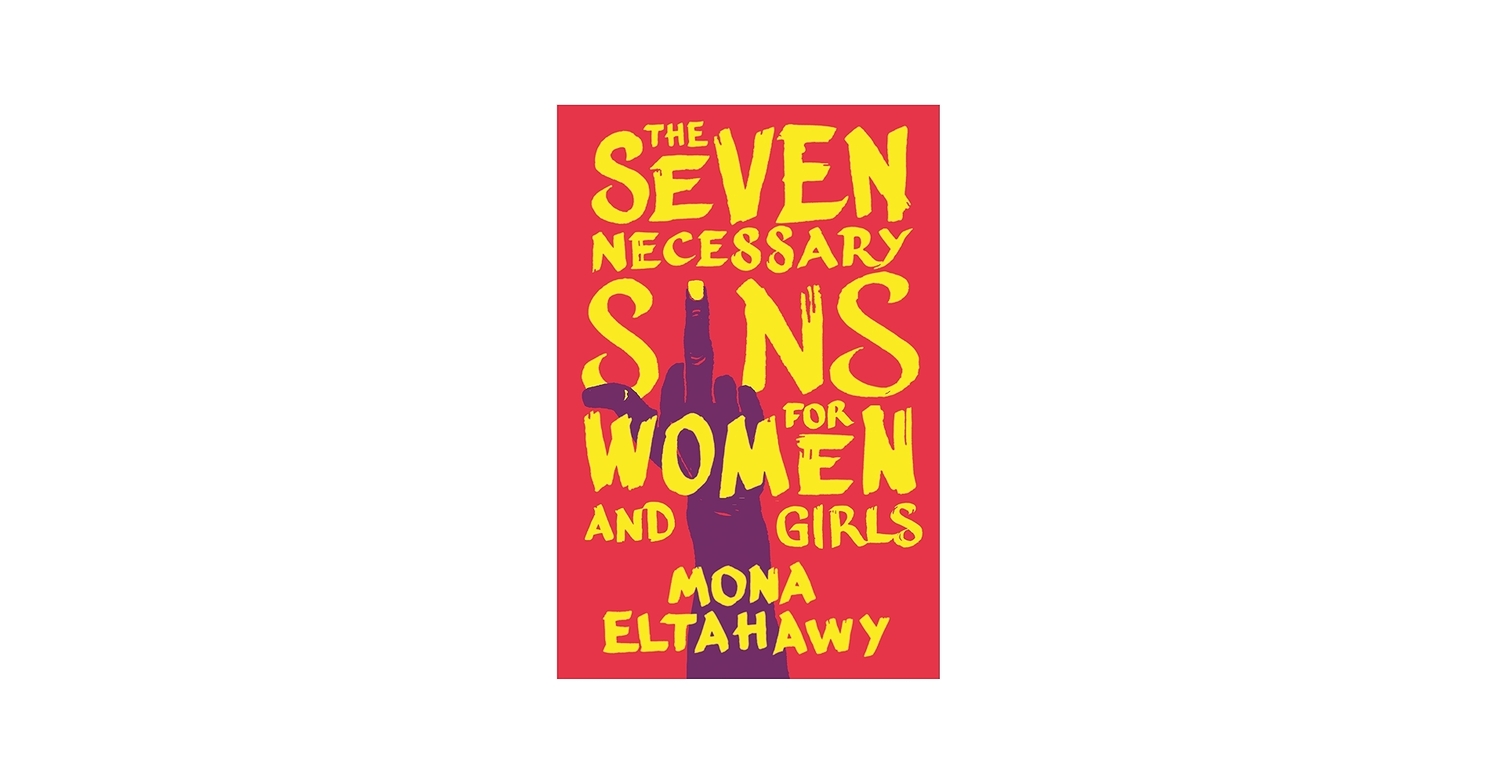
This is the third in a seven-part series reflecting on Mona Eltahawy's The Seven Necessary Sins for Women and Girls. The book is available through the UUA Bookstore as well as the Calgary Public Library for those who wish to read along
In our children's religious education classroom, we have a poster that simplifies our Unitarian Universalist principles into language a child can hold. In place of our fifth principle - the right of conscience and the use of the democratic process - it says simply: "All people need a voice."
It is a beautiful and noble aspiration.
As I sit with Eltahawy's third chapter - Profanity - I find myself wondering about the gap between what we profess in our faith and what we truly live out. We say all people need a voice. But if I truly believed that - not just in theory, but in practice - who would I have to become? Whose voice makes me uncomfortable? And what might that discomfort be trying to teach me? Whose declaration of "fuck" would I have to learn to hear as prayer?
Eltahawy names something hard: demanding that women and girls be polite is a demand that we signal virtue above all else. It erases our message. It places us on a pedestal where we can be admired but never heard - never disruptive, never dangerous.
Misogyny is not civil. Oppression does not care whether we approach it nicely. It exists only to dominate and control. If we hope to dismantle it, we must be willing to meet it with equal force.
Who Does Civility Serve?
Eltahawy opens with a question that cuts to the heart of her argument: who actually benefits when we demand politeness? Civility, she observes, is a luxury - a tool most available to those untouched by the very injustices polite discourse is meant to address. For those who deny the full humanity of women and girls, she feels no obligation to be civil. In this context, profanity becomes an act of rebellion: "the verbal equivalent of civil disobedience" (p 59).
She illustrates this through Dr. Stella Nyanzi, a Ugandan scholar imprisoned for calling her president a "pair of buttocks" in a poem and for speaking openly about menstruation and queerness. Nyanzi traces the demand for female politeness directly to British colonialism, which imposed "white, Christian values" and a narrow standard of respectability on Ugandan society (p 61). Her defense against tone-policing is stark: in the absence of guns or money, her words - including her insults - are her primary tools of resistance. As she puts it, "I can still write and think and insult and abuse" (p 63).
Eltahawy then forces a reckoning with what we deem offensive. A president is insulted - offensive. A woman mentions menstruation - offensive. Meanwhile, girls miss school for lack of sanitary products, are pressured into sex in exchange for them, and police violence against women goes unchecked. "Surely such misogyny is more offensive than words," she writes (p 64).
She turns to the hypocrisy of language around women's bodies. Women must hear terms for their genitalia used as insults, yet are chastised if they themselves utter them. Patriarchy claims "the power to offend, the power to be obscene" while denying women the same (p 67). The story of Michigan representative Lisa Brown, banned from speaking for saying "vagina" during an anti-abortion debate, makes the point plain: "Patriarchy wants to control vaginas, but it also wants to control who has the right to even say the word 'vagina'" (p 68). Eltahawy's answer to this is unequivocal: "I claim my vagina ... I am uncivil. I reject decorum. I insist we tell cis-heteropatriarchy to fuck off" (p 67).
She names the "politics of respectability" - the way marginalized groups police each other to gain mainstream acceptance (p 74). After she appeared on television with both arms in casts from a police beating, a woman told her: "Many people support you, but they would support you more if you didn't say 'fuck' so much" (p 71). Eltahawy's refusal is absolute: support conditional on self-censorship is not support.
Ultimately, her message is a celebration of becoming "too much." Women are taught to be small, quiet, and unthreatening - to be "less than." To be "too loud," to swear, to go too far, is to become uncontrollable and unashamed. That, she insists, is precisely what makes a woman dangerous (p 76).
Her closing call is a challenge to meet patriarchy with equal force. "We must make patriarchy fear us," she writes. "We must reject politeness; there is nothing polite about patriarchy." If society bleeps out curse words, how do we bleep out patriarchy itself? For Eltahawy, swearing is an act of claiming freedom. Owning her language is inseparable from owning her body. Her final word is a battle cry: "I say 'fuck' because I will own that word. I own my body, and I own my language. Fuck the patriarchy" (p 77).
A Challenge for Our Congregation
For our faith community, this invites reflection - not just on what we believe, but on what we're actually prepared to receive. When a demand for justice arrives in a tone that makes us flinch, can we still hear the truth in it? When someone refuses to be polite to the system that's harming them, can we follow their lead instead of asking them to soften? What would it look like to measure a message not by its delivery, but by its urgency? And if we truly believe that all people need a voice, might our own discomfort be a sign that we're finally hearing one we've been trained to ignore?
The people who need spiritual care most urgently are often the people we want to give it to the least. They say "fuck" when we wish they wouldn't. They refuse to shrink. They are also the ones who can show us how to survive. If we want to survive what's breaking - and help build what comes next - we must become people who don't turn away from the ones who make us uncomfortable.
We must stop asking women to be polite in response to their oppression. We must refrain from insisting on decorum over disruption. We must learn to see profanity not as a failure of civility, but as a necessary tool of liberation.
The poster in our children's classroom says all people need a voice. Eltahawy reminds us that for some, that voice must be a roar. May we have the courage not to turn away.