Seizing the Spotlight

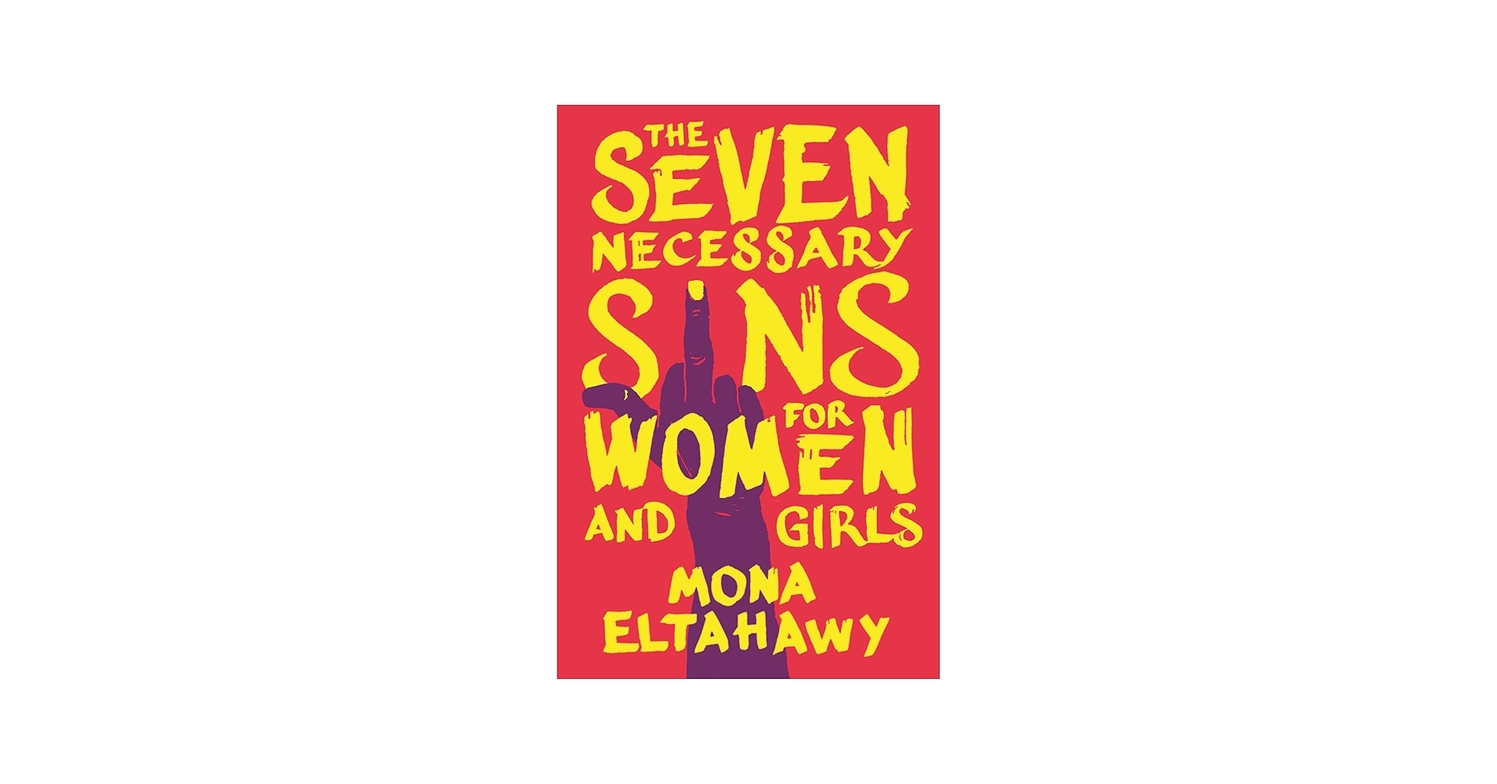
This is the second in a seven-part series reflecting on Mona Eltahawy's The Seven Necessary Sins for Women and Girls. The book is available through the UUA Bookstore as well as the Calgary Public Library for those who wish to read along.
There is a dance that women are taught from a very young age. We must not demand too much attention, lest we be labeled vain or selfish. At the same time, we are socialized to freely and generously give our own attention away—to the comfort of others, to the needs of men, to upholding the patriarchy.
Reading Eltahawy's second chapter, I was transported back to an experience I had around ten years old, deeply envious of the attention lavished on a classmate who showed up to school one day with a broken arm in a cast. I remember wanting a broken arm as proof of my own pain that others could not ignore—something that would make my suffering visible and real to them instead of sensitivity to be brushed off as an overreaction. I wanted my pain to matter so much that people would flock to sign my very cool cast and beg to hear the story behind it.
Looking back, I am struck by the logic of that wish at such a young age: I was hoping for the right type and amount of harm to come to me because it seemed the only way my safety would matter to anyone. The very thing that might protect me—visibility, proof, attention—required me to be noticeably injured first. This is the cruel double edge that women and girls navigate daily. The tools we reach for to preserve our safety are often the same ones used against us, or they demand we sacrifice ourselves before they work at all.
Eltahawy names this dynamic with unflinching clarity. Attention can be safety for women; visibility can sometimes stop the patriarchy from harming you. But the moment a woman takes up space—the moment she disrupts—the world shows up to drag her back down.
The Attention Detection Brigade
Eltahawy introduces the informal network that polices visible women.
During the 2011 Egyptian revolution, she was beaten and sexually assaulted by riot police, who broke her left forearm and right hand. She appeared on television in casts to expose the regime's violence. In response, she was accused of throwing herself at police for fame.
Eltahawy is blunt: "My fame saved me. If I were an unknown woman, I might well have been gang-raped or killed" (p 39). This is the cruel irony: attention can save your life and in the same moment be used as evidence against your character.
In a patriarchal world, Eltahawy observes, men are given a metaphorical twenty-three hours and fifty-five minutes of attention while women are allotted a tight five minutes. On top of that, the rules are rigged. Want too much attention? You're a whore. Refuse it when patriarchy demands? It stalks you anyway. "We can't win. And so we should refuse to play. We should defy and subvert patriarchy's rules on attention instead" (p 43).
The Hierarchy of Visibility
This policing of attention does not affect all women equally. Attention is distributed according to an unyielding hierarchy. A 2018 study from the Annenberg Institute found that of nearly 49,000 film characters, only 30.6 percent were female speaking characters. Of that small percentage, just 29.3 percent were from underrepresented racial groups, 2.5 percent had disabilities, and less than 1 percent were LGBTQ (p 46).
"Patriarchy uses attention as a reward for those it anoints as worthy: The white. The thin. The cisgender. The feminine. The able-bodied" (p 46). By withholding attention, it punishes. Trans women of color in the US have an average lifespan of just thirty-five years. Trans women who are read as trans by others are subjected to more significant violence than trans women who are read as cisgender.
"I Count. I Deserve Better."
Eltahawy poses a revolutionary question: "What would the world look like if we did not wait to be anointed worthy of attention according to patriarchy's standards? What if we commanded, seized, and created attention instead?" (p 47).
She points to Ireland's 2018 referendum repealing restrictive abortion laws. In exit polls, 43 percent of voters cited women's personal stories in the media as having the biggest impact. "Attention won the day: the belief that women's stories were important and deserving of attention" (p 47).
This is the heart of it. Oppressed people need to say "I count. I deserve better." When individuals connect around that declaration, a revolution announces itself. That is why women are shamed "for 'doing it for attention.' Patriarchy recognizes the potential power of saying 'I count'" (p 49).
The Price of Visibility
Seizing attention carries risk. Qandeel Baloch, a Pakistani social media star, was drugged and strangled by her own brother in 2016. He confessed publicly, saying he was "proud" of killing her.
Journalist Issam Ahmed wrote that Qandeel "wasn't seeking the spotlight, she was seizing it, and turning its full glare on Pakistan." Her feminism was "loud, proud, in-your-face... [and] sought approval from no one." Qandeel sought to claim more than the five minutes she was grudgingly allowed, and it was that threat her brother could not tolerate—so he strangled it. (p 51).
Becoming Attention Whores
Eltahawy ends the chapter by reclaiming a slur. We have been taught false humility, trained to believe that wanting to be seen is shameful. Patriarchy pits women against each other, encouraging us to tear down those who are visible. To seize the visibility patriarchy would deny us, "we must all become attention whores" (p 53).
She draws on Virgie Tovar, who writes about how patriarchy uses beauty standards to control women's bodies. Tovar reflects: "Being weird and bossy and theatrical and curious had always been the best things about me. But those qualities attracted attention, and attention was emotionally dangerous" (p 54).
The solution is not to shrink. It is to take up space, to demand to be seen, to say "Look at me" when patriarchy insists you should be invisible.
A Challenge for Our Congregation
As we continue through Women's History Month, I invite us to reflect on our own relationship with attention. Who do we see in our community? Who is invisible? Ask yourself: who do I fail to see, and why?
Eltahawy reminds us that "the most subversive thing a woman can do is to talk about her life as if it really matters, because it does" (p 47). For those of us in this predominantly white, liberal religious institution, this means examining how we have benefited from the hierarchy of visibility. It means using whatever platform we have to signal-boost those pushed to the margins.
"You need a robust ego to be a feminist. You need a massive amount of faith in yourself and your right to be seen and heard in order to be a warrior against patriarchy—because it is war" (p 55).
May we have the courage to be seen. May we have the courage to see each other. And may we, together, turn the full glare of attention on the systems that would prefer us to remain invisible.
“If you are silent about your pain, they’ll kill you and say you enjoyed it.”
— Zora Neale Hurston