Musings from the Minister: What Does Love Ask of Us? The Courage to Listen

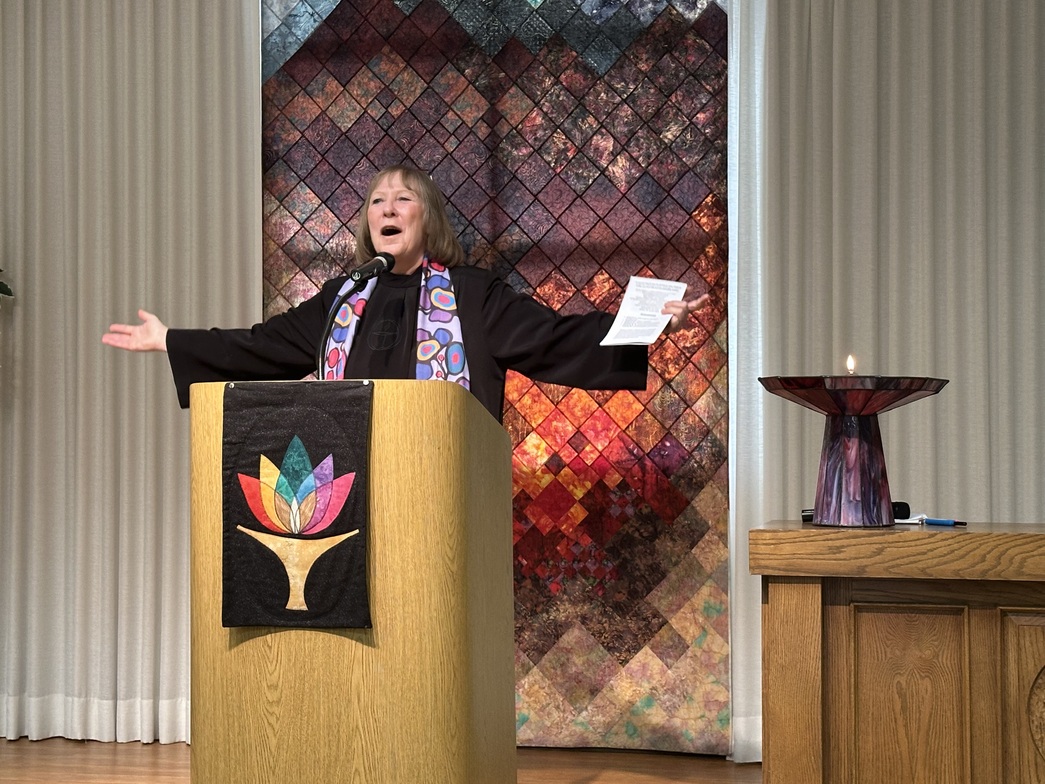
What does love ask of us when we encounter perspectives and experiences that challenge us? How do we stay connected when we disagree, listening with an open heart without losing sight of our own convictions?
With 76% of Albertans voting to stay in Canada in the recent referendum, we have an opportunity to reflect on how we live together in a province where people hold different hopes for the future.
In one of my recent sermons, I shared the work of David Campt on navigating difficult conversations about race and difference. His method is called RACE: Rapport, Ask, Confirm, Expand. It invites us to find human connection, ask about another person’s experience, acknowledge what we understand without necessarily agreeing, and offer another perspective with care. The goal isn’t to win an argument, but to create the possibility of genuine conversation.
This November, as Calgary Unitarians explore What Does Love Ask of Us?, we have two opportunities to practise listening, learning, and compassion.
On Monday, November 2, Rabbi Mark Glickman, spiritual leader of Temple B’nai Tikvah, joins us for Israel in 2026: Some Loving, Anguished Reflections of a Liberal Zionist, sharing personal reflections on a subject marked by grief, complexity, and deeply held convictions.
On Sunday, November 15, the Palestine Land Exercise invites us to explore Palestinian history through the themes of land, displacement, colonization, and power.
These are two distinct experiences, not the only perspectives or a complete picture. Jewish, Palestinian, Israeli, and other communities hold a diversity of views. Those wishing to explore further may be interested in the New Shul Chavurah, Calgary’s independent, progressive, grassroots Jewish community with a social justice orientation. Other voices and resources can also help broaden our understanding.
Our intention is to create opportunities for learning and deeper understanding. We may feel challenged or disagree with what we hear. Compassion doesn’t require us to abandon our convictions; it asks us to approach one another with curiosity and care, while resisting both antisemitism and Islamophobia.
Our Unitarian Universalist faith calls us to honour the inherent worth and dignity of every person while pursuing justice and compassion. We nourish one another through connection, whether by offering comfort, sharing food, or listening to a perspective different from our own.
May we have the courage to listen without losing ourselves, speak honestly without closing the door, and build a community—and a province—where dignity is not conditional on agreement and more of us can find a place to belong.
Curiosity can be stronger than certainty. Compassion can be stronger than fear.